SOLUTIONS
Syntes AI connects contract requirements, purchase requests, supplier data, pricing, inventory, delivery schedules, past performance, and operational documents into a live intelligence layer. Governed AI agents use that context to analyze requirements, coordinate procurement workflows, identify risks, and support execution with every conclusion linked back to its source.
Book a Demo
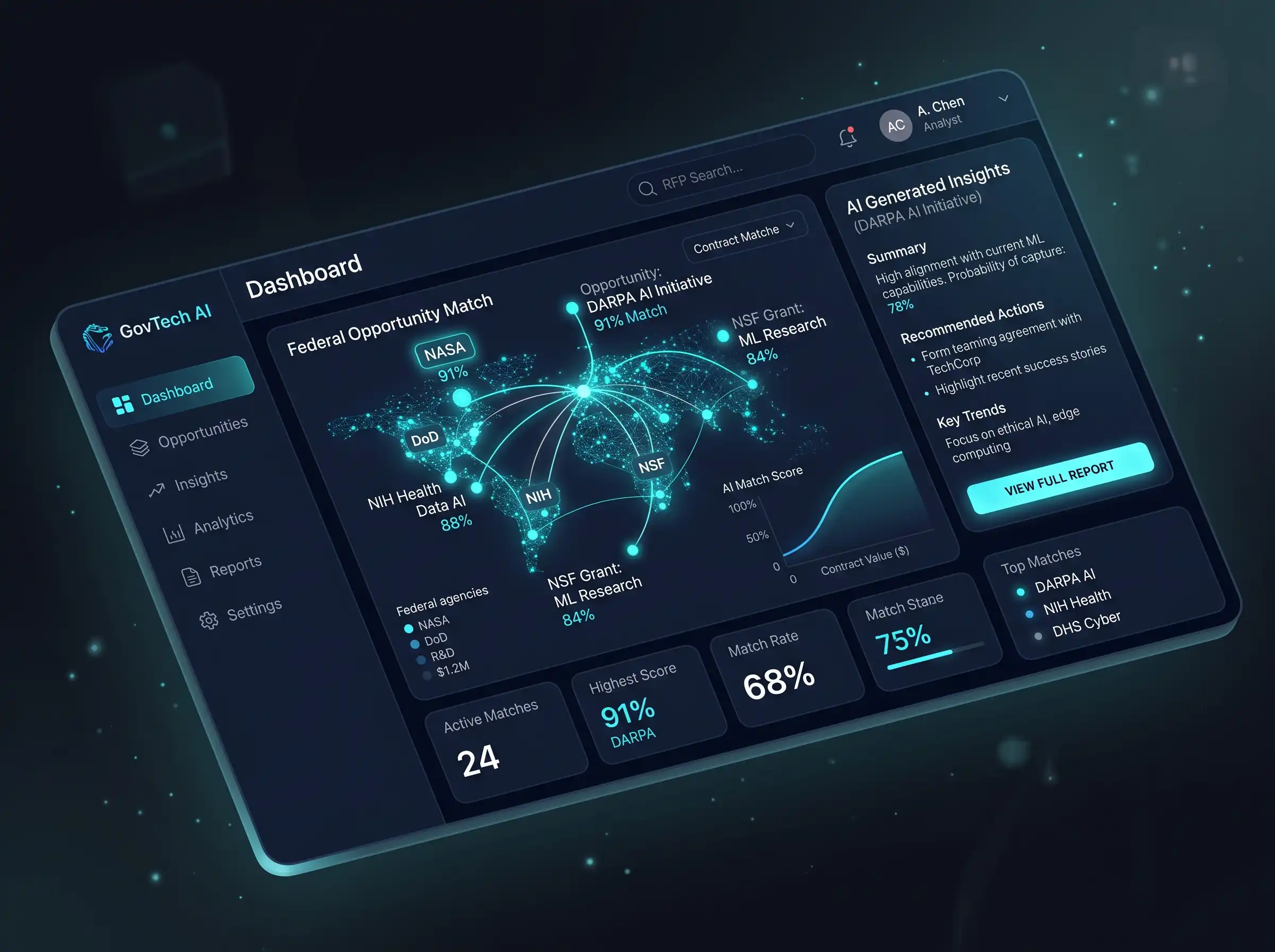
DLA contractors manage extensive contract, procurement, supplier, and delivery information. The context needed to execute each requirement is still scattered.
Purchase requests and contract requirements live separately from supplier, product, inventory, pricing, and historical performance data
Teams manually research sourcing options, lead times, pricing, compliance requirements, and supporting documentation
Critical procurement decisions depend on assembling information from multiple systems, suppliers, documents, and people every time
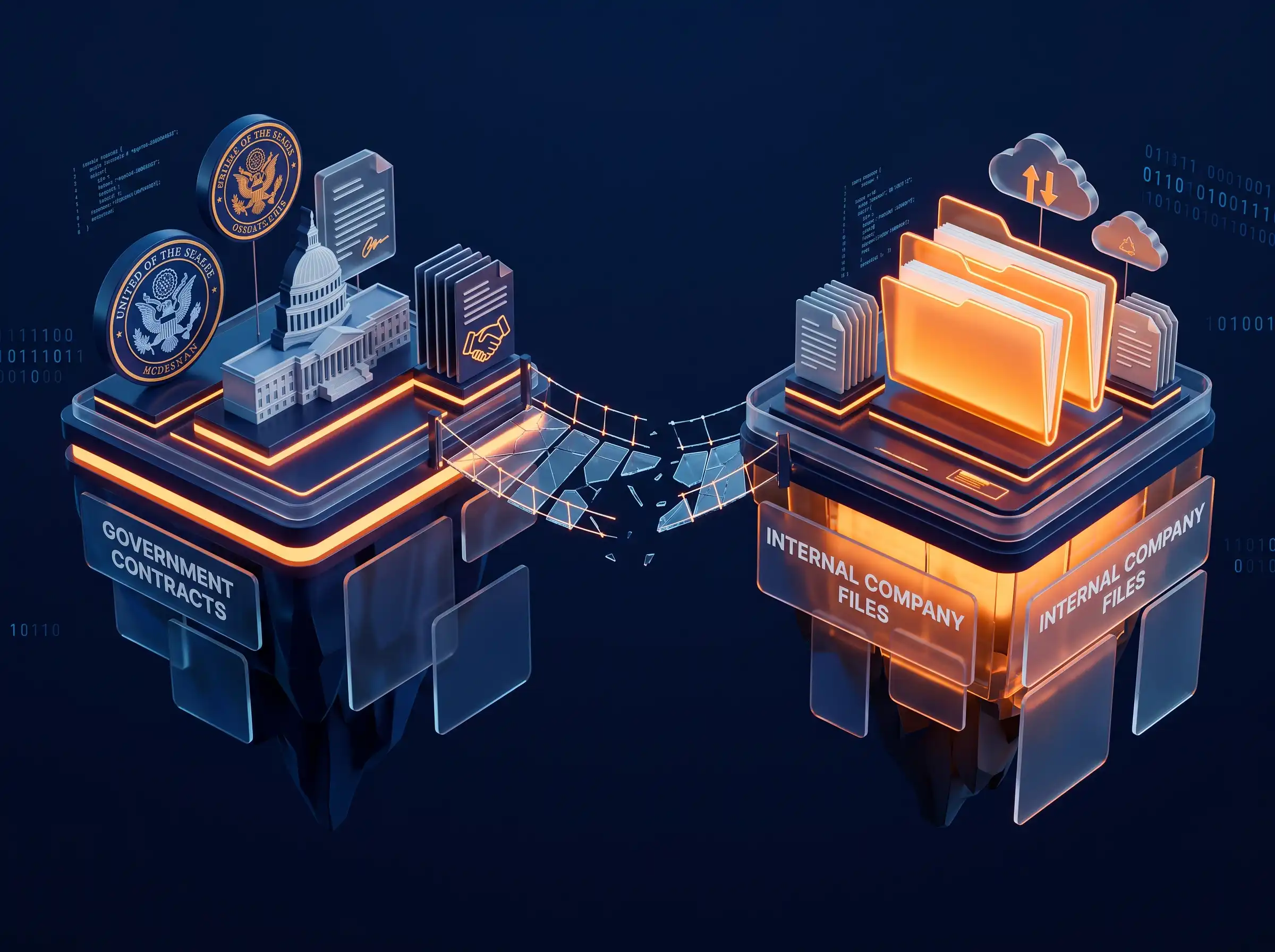
Years of valuable procurement and program knowledge are buried across systems, documents, spreadsheets, emails, and individual workflows.
Supplier quotes, purchase history, pricing, technical specifications, contracts, and performance records are difficult to reuse at the right moment
Teams repeatedly search for sourcing and program information that already exists somewhere in the organization
Valuable relationships between requirements, products, suppliers, pricing, lead times, contracts, and prior performance remain hidden
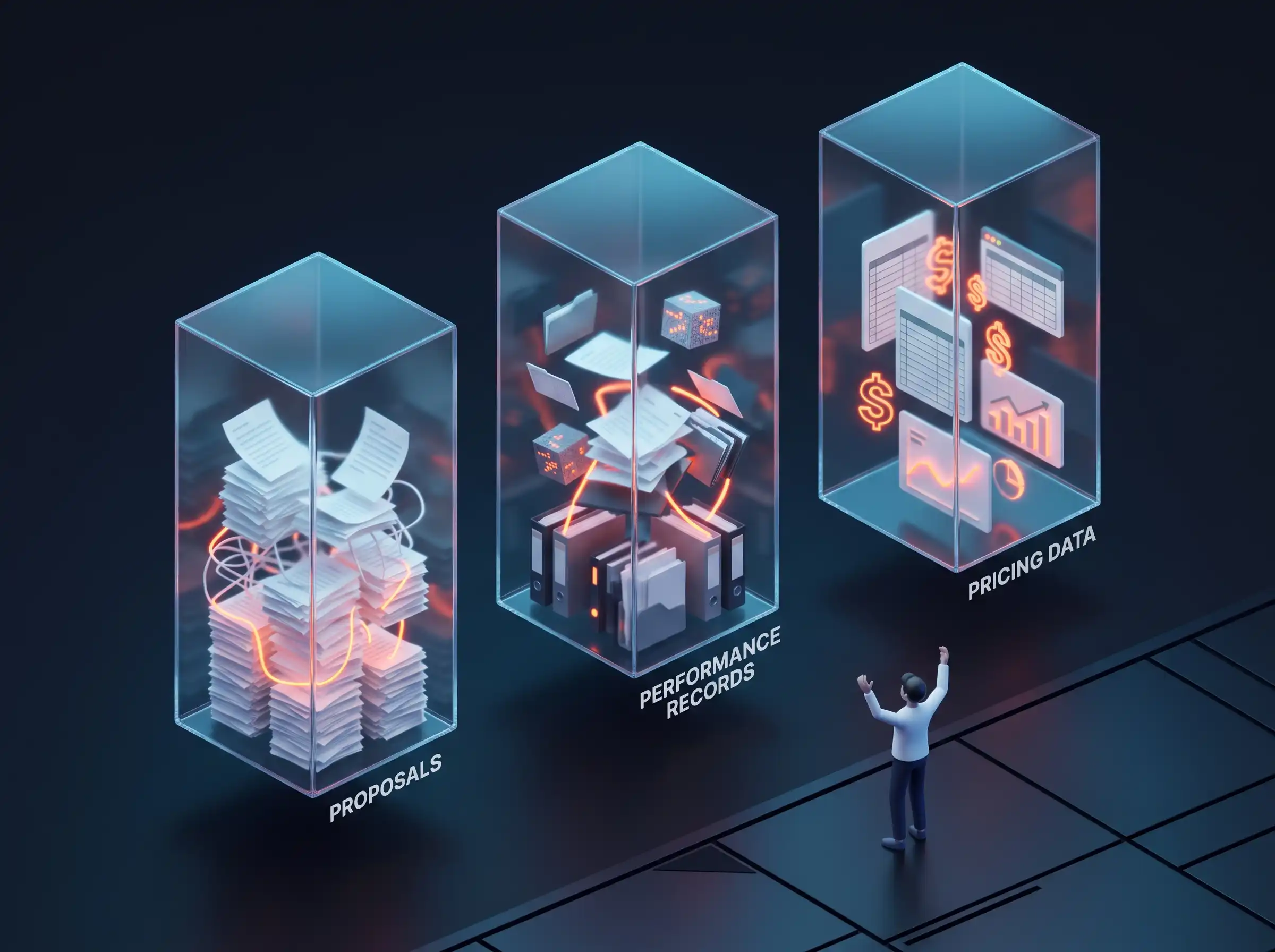
DLA and government-contract execution requires more than a plausible AI answer.
AI-generated recommendations need to be grounded in approved contract, supplier, pricing, inventory, and operational information
Purchasing, supplier commitments, pricing changes, and other sensitive actions require permissions, review, and human approval
Teams need to understand where an answer came from before using it for procurement, pricing, compliance, or program decisions
Syntes creates a connected operational model across the information federal contractors use to source, procure, deliver, and manage DLA programs.
Bring together contracts, purchase requests, supplier data, products, pricing, inventory, procurement records, documents, ERP data, and operational systems.
Build relationships between programs, requirements, products, suppliers, pricing, availability, lead times, contracts, deliveries, and historical performance.
Use AI agents to evaluate requirements against sourcing options, supplier performance, inventory, pricing, delivery risk, and contractual obligations.
Surface relevant information to procurement, supply chain, program management, finance, contracts, operations, and leadership through shared workflows.
Generate briefs, initiate sourcing workflows, route approvals, monitor exceptions, and write approved information back into connected systems while preserving the evidence behind each decision.
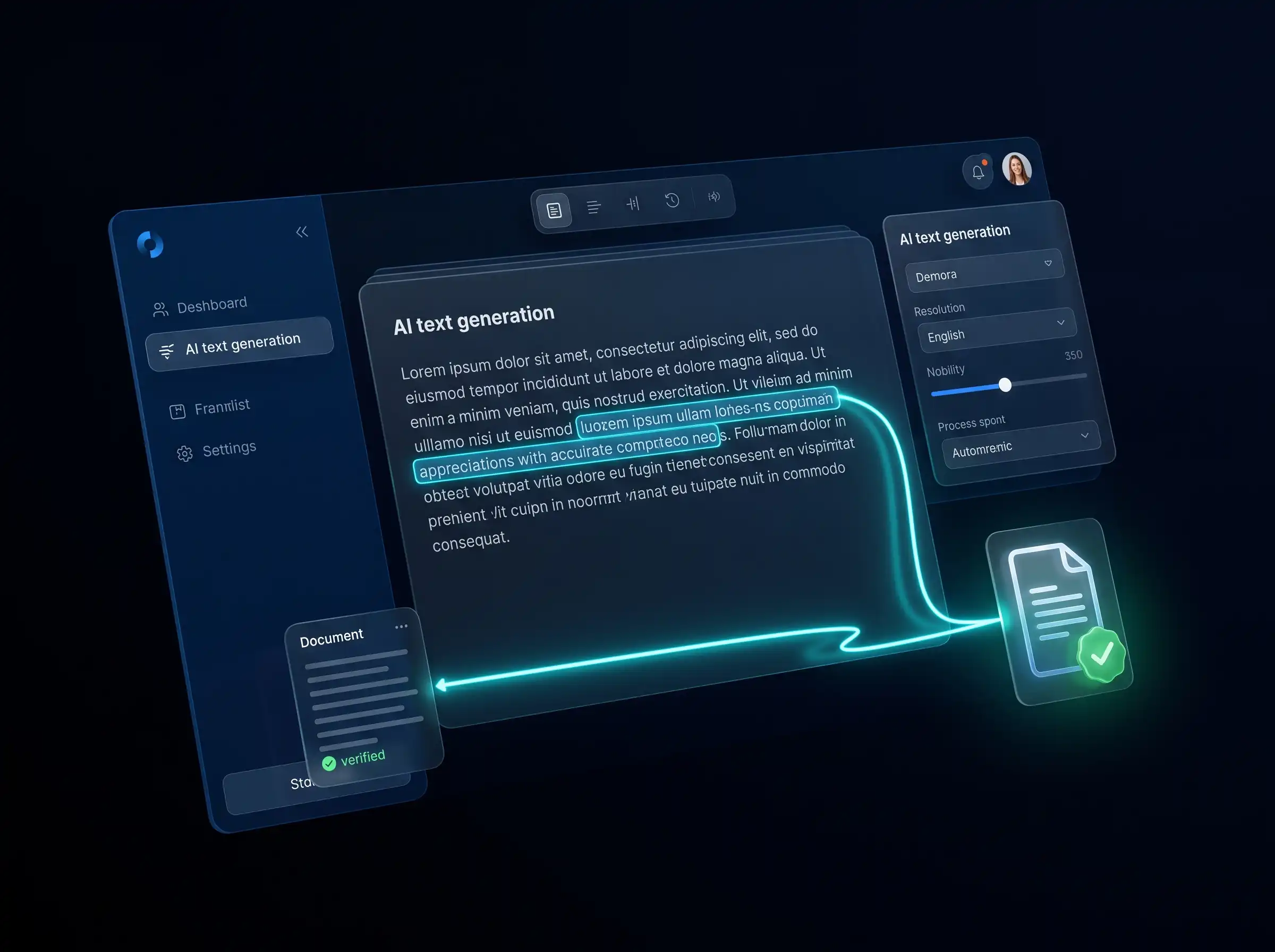
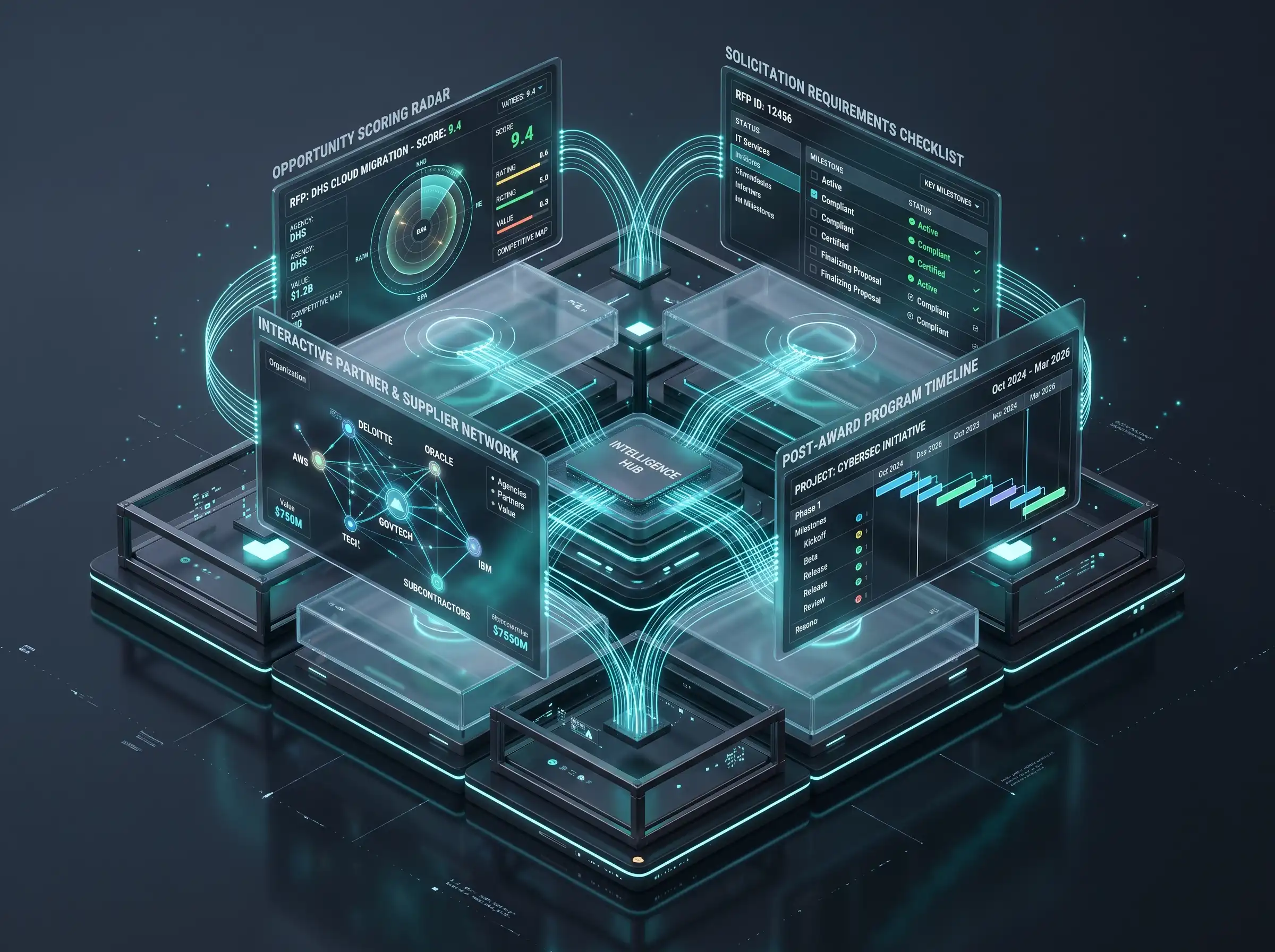
Turn DLA requirements, purchase requests, contracts, and supporting documents into structured requirements, quantities, deadlines, obligations, dependencies, and source-grounded operational intelligence.
Match requirements against qualified suppliers, products, historical purchases, availability, pricing, lead times, certifications, and prior supplier performance.
Connect previous purchases, supplier quotes, pricing history, technical documentation, contracts, certifications, and approved information so teams can locate relevant knowledge in context.
Bring opportunity requirements together with supplier, product, pricing, availability, and internal procurement information to support faster, better-informed response workflows.
Support MAAC, SOE TLS, MRO, IPV, PBL, and related supply programs by connecting requirements with suppliers, products, pricing, availability, procurement activity, and delivery information.
Understand purchase commitments, supplier deposits, customer payment timing, inventory exposure, pricing, and expected margin before procurement decisions are finalized.
Maintain connected context throughout execution so teams can continuously analyze requirements, supplier actions, deliveries, documentation, compliance, and program performance.
Live operational context across opportunities, contracts, documents, suppliers, and internal systems
Enterprise knowledge graph connecting agencies, requirements, capabilities, partners, and past performance
AI agents grounded in organization-specific context and approved source data
Source-linked answers for review, validation, and decision support
Role-based permissions and human approval for sensitive workflows
One-way and permissioned two-way integrations with existing systems
Graph-native analytics for understanding relationships across complex opportunities and programs
Low-code and no-code tools for building contractor-specific applications and workflows
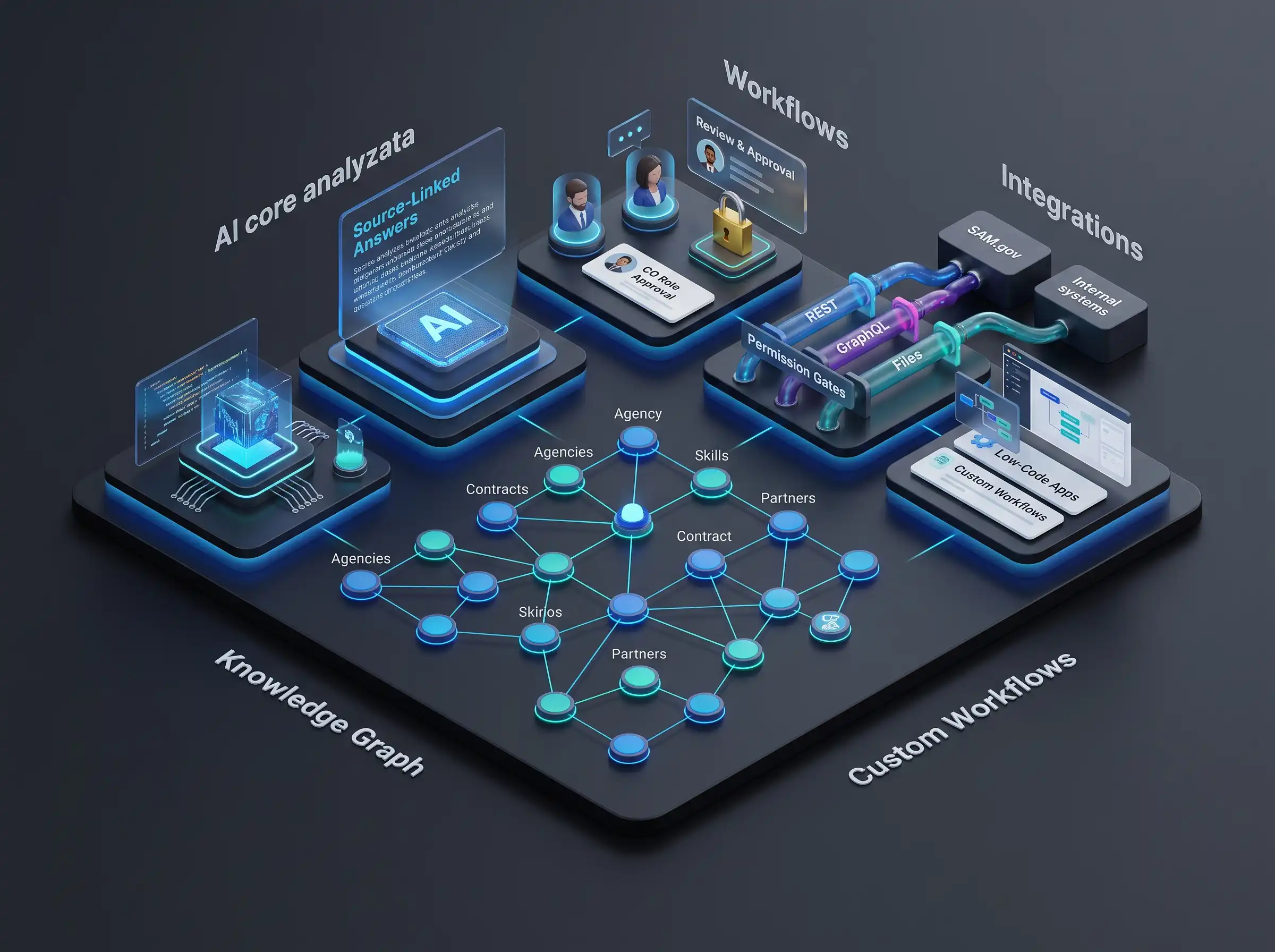
Contract records, purchase requests, supplier information, pricing, inventory, technical documents, delivery data, and institutional knowledge coexist in a connected enterprise knowledge and context graph.
Agents reason over your requirements, suppliers, products, pricing, contracts, inventory, relationships, and historical performance before generating an answer or recommendation.
Source references, reasoning traces, permissions, audit history, and human approvals help teams maintain control over procurement decisions and AI-assisted operational actions.
Syntes operates across existing ERP, procurement, document, CRM, and operational systems and can begin with a bounded program such as MAAC before progressively replacing spreadsheets, point applications, manual workflows, or legacy dashboards.
Instead of treating each purchase request as an isolated transaction, Syntes connects it to the information needed to execute successfully.
A DLA requirement arrives.
Syntes can connect the requirement to relevant suppliers, products, purchase history, pricing, inventory, delivery performance, contract obligations, and supporting documentation, then provide the team with a structured operational intelligence brief.
From there, governed agents can support the next workflow: supplier research, RFQ preparation, sourcing analysis, margin review, purchasing, approval, delivery monitoring, compliance, or escalation.
Connect the systems and knowledge your teams already use. Build context around every requirement. Deploy governed AI workflows around procurement, margin, delivery, and contract execution.